
Does Mouth Taping Improve Sleep? My 28-Night Experiment (Athlytic Data)
Quick note: Some links in this article may be affiliate links. As an Amazon Associate I earn from qualifying purchases. If you buy through my links, I may earn a small commission at no extra cost to you. I only recommend products I personally use.
After years of tracking my sleep with an Apple Watch and Athlytic, I ran a simple experiment: 28 nights of sleeping with mouth tape to see if it actually worked.
What Actually Changed
For the past few years I’ve tracked my sleep using my Apple Watch and Athlytic. That means I already have years of baseline data on my sleep duration, recovery, HRV, and overall sleep trends.
After about a month of sleeping with mouth tape, I started looking at the results.
The results were interesting — and in some ways not what I expected.
Why I Started Using Mouth Tape
Every year I tend to get at least one sinus infection. Like clockwork, I woke up with one after snow hit us in North Georgia.
When I was trying to figure out why, I asked ChatGPT what some possible causes might be. It suggested that dry air from the heater and mouth breathing during sleep can contribute to sinus irritation and dryness, which over time may make sinus issues more likely.
So I decided to test a simple change and document it.
If I was breathing through my mouth while sleeping, maybe forcing nasal breathing could improve my sleep and possibly help my sinuses as well.
So I went on Amazon, bought some mouth tape, and started the experiment.
The Experiment
I wore mouth tape for about a month and continued tracking my sleep and recovery with Athlytic.
Everything else stayed roughly the same — training schedule, caffeine habits, and my general bedtime window.
The important thing about this test is that I did not overhaul my routine.
In fact, on several nights I actually followed worse evening routines than usual. Late nights, inconsistent wind‑downs, and normal life interruptions still happened.
The only real variable I changed was taping my mouth before going to sleep.
That allowed me to see whether mouth tape itself made any noticeable difference.
What the Athlytic Data Showed
Athlytic allows you to tag behaviors and compare trends across time. After several weeks of tagging “Mouth Tape,” the trends became pretty clear.
Recovery Score Increased
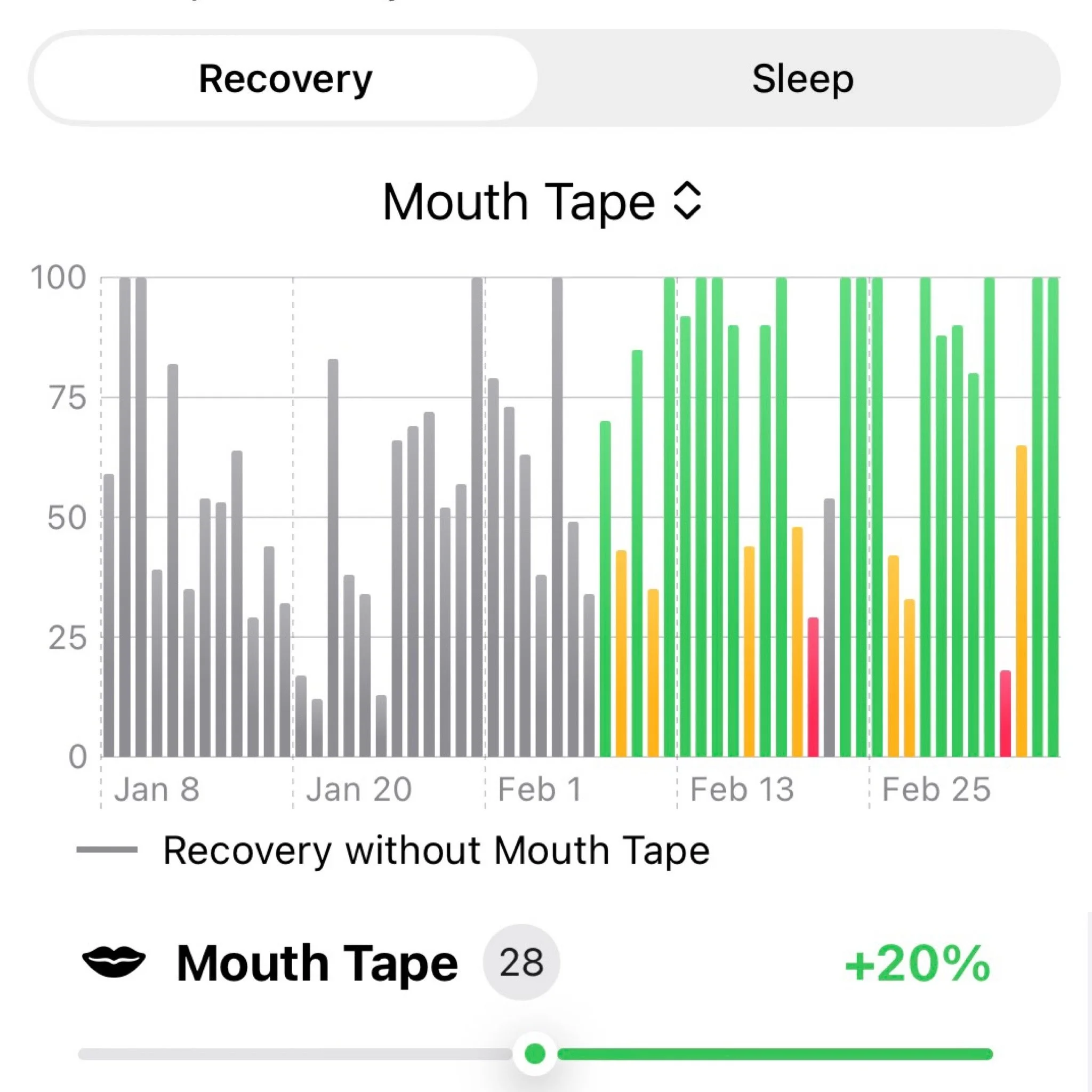
Athlytic Recovery Data
Compared to my normal baseline range, my recovery score increased by about 20% during the period where I used mouth tape.
Looking at the recovery graph, the nights where mouth tape was used were far more consistently in the green recovery zone compared to my earlier baseline data.
This suggests my body was recovering a little better overnight, even though my training and schedule stayed roughly the same and perhaps more intense across a few weeks.
Sleep Score Decreased Slightly
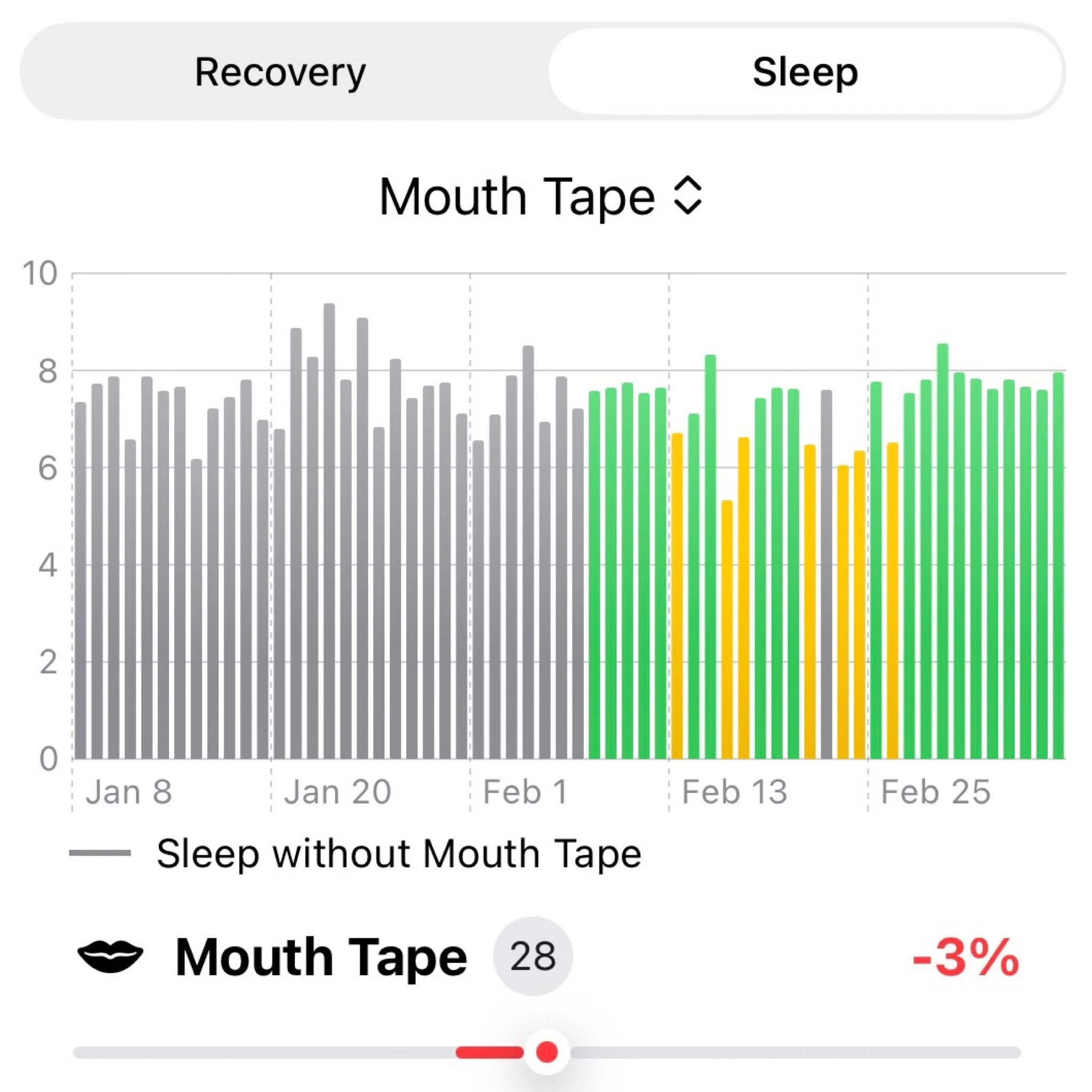
Athlytic Sleep Data
This initially looked like a negative result.
My sleep score actually went down slightly (about 3%) during the experiment.
But looking closer, the drop was small and my sleep scores still stayed mostly in the 7–8 range, which is already considered good sleep quality.
So while the app registered a small decrease in sleep score, the more important metric for my lifestyle — recovery — actually improved.
Since my sleep score went down, that also tells me the recovery improvement probably wasn’t coming from simply sleeping more during the last month (which I definitely haven’t).
What I Personally Felt
The data was interesting, but the subjective changes were just as noticeable.
My Sinuses Felt Much Smoother
Normally my sinuses feel slightly irritated or dry in the morning, especially during allergy seasons.
After sleeping with mouth tape for a few weeks, my sinuses felt noticeably smoother and clearer when I woke up.
Considering I get a sinus infection every year, that alone makes this worth continuing.
Less Brain Fog
I also noticed less brain fog in the mornings and more clarity throughout the day. With less brain fog in the mornings I’ve been performing better in my rolls at jiu‑jitsu.
I also feel much more present during training than I have in recent memory.
I can’t give mouth tape all the credit here — training, sleep consistency, diet, and lifestyle all play a role — but I do feel like it has helped quite a bit.
The Mouth Tape I Used
For the experiment I kept things simple and used a basic mouth tape product. It’s simple, comfortable, and didn’t bother me while sleeping.
It stayed on comfortably through the night and removed easily in the morning.
What Other People Told Me After I Shared This

After sharing my experiment on Instagram, I received a surprising number of messages.
Several people told me that they — or their spouse — use mouth tape every night and consider it a complete game changer for their sleep.
That obviously isn’t scientific data, but it was interesting to see how many people had independently discovered the same habit and stuck with it long‑term.
Like most things related to sleep and recovery, the impact will probably vary from person to person. But based on my own experience and the feedback I’ve received, it’s a small experiment that may be worth trying.
Potential Benefits of Mouth Taping for Sleep
Based on my own experiment and what others have reported, mouth taping may help with a few things:
1. Encouraging nasal breathing
Keeping the mouth closed during sleep may promote breathing through the nose, which naturally filters, humidifies, and regulates airflow.
2. Reducing dry mouth in the morning
Many people wake up with dry mouth when they breathe through their mouth at night. Mouth tape can reduce this. I noticed a difference after my first night sleeping with it.
3. Supporting more consistent sleep recovery
In my case, recovery scores improved during the experiment even though my sleep score stayed roughly the same.
4. Potential sinus comfort improvements
After several weeks of mouth taping, my sinuses felt smoother and less irritated when waking up.
Like most sleep experiments, results will vary from person to person. But it’s a very simple habit that may be worth testing.
My Verdict
Mouth taping didn’t dramatically transform my sleep scores.
But it did a few things that matter:
• My recovery scores improved
• My sinuses feel smoother in the mornings
• I feel clearer and more present during the day
For something that takes about 10 seconds before bed, that’s a worthwhile change.
So for now, mouth tape has earned a permanent spot in my nighttime routine.
Sometimes the improvements that matter most aren’t huge life hacks.
They’re small systems that quietly make the basics work better.
If you enjoy experiments like this and want to see more training, recovery, and discipline systems I'm testing, you can follow along on Instagram or check out the rest of the articles on this site.
Want More Experiments Like This?
If you enjoyed this experiment, you can join my newsletter where I share:
• Training experiments I'm running
• Personal thoughts and reflections in my life
• Simple systems that help improve discipline, fitness, and daily performance
Subscribe to the Average Ninja newsletter here: Sign Up
Common Questions About Mouth Taping for Sleep
Does mouth taping actually improve sleep?
In my case, mouth taping did not dramatically improve my sleep score, but it did improve my recovery score by about 20% compared to my normal baseline range. I also experienced clearer sinuses and less brain fog during the day.
Is mouth taping safe?
Most healthy people can safely try mouth taping if they can comfortably breathe through their nose. However, people with nasal obstruction, severe sleep apnea, or breathing issues should talk to a healthcare professional before trying it.
How long should you test mouth tape?
If you want to test mouth taping yourself, I recommend trying it for at least a few weeks while tracking your sleep and recovery metrics. That gives enough time to notice meaningful trends.
If you're interested in optimizing recovery, you might also enjoy my article on Building a Better Nighttime Routine.